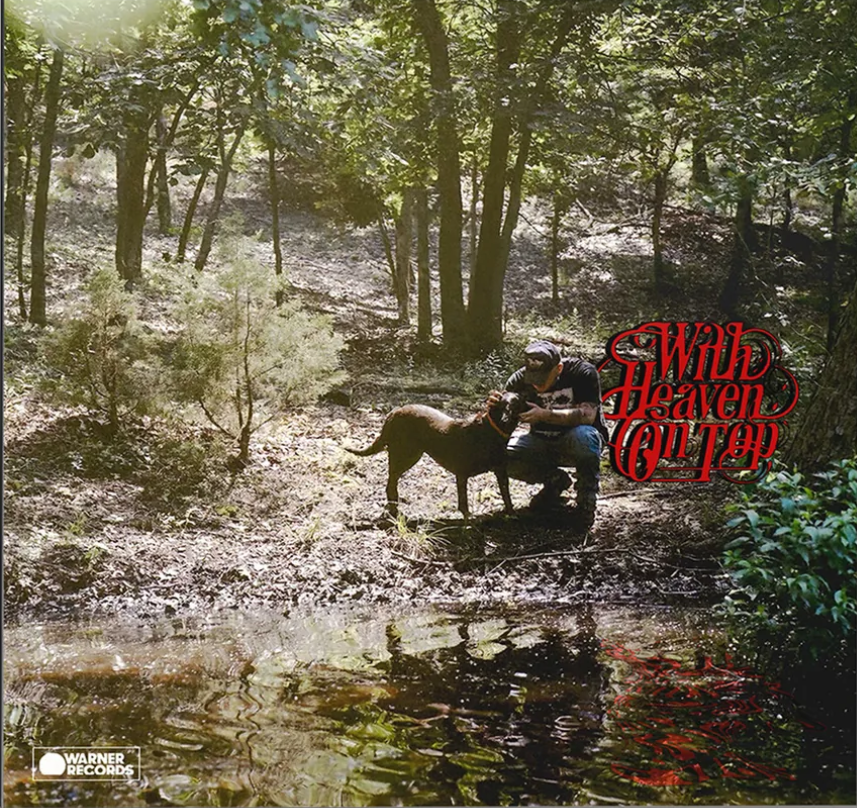
Het mag inmiddels geen verrassing meer heten dat Zach Bryan zijn zesde studioplaat With Heaven on Top opent met een gedicht. De Amerikaanse singer-songwriter/countryster is in korte tijd een gevestigde naam geworden die niet alleen in Amerika stadions uitverkoopt (ook in Nederland vult hij in juni dit jaar het Philips stadion), maar zich verre houdt van de opsmuk van Nashville. Hij kiest bewust voor een ongepolijst geluid, zelfs te typeren als onaf. Alsof hij de luisteraar een inkijkje geeft in zijn dagboek. Maar liefst 25 nummers vol persoonlijke gevoelens, melancholie en herinneringen. Over zijn overleden moeder (DeAnn's Denim). Of over zijn in de media breed uitgemeten scheiding van Brianna LaPaglia (Skin). Slechts een enkele keer, zoals in het ijzersterke Bad News, waagt hij zich aan maatschappelijk commentaar. Hij schetst een verdeeld Amerika, maar doet dat vanuit de liefde voor zijn land eerder dan veroordeling. Ondertussen daarmee een plaatsje tussen Dylan en Springsteen opeisend. In principe zijn de nummers telkens opgebouwd rond zijn stem en akoestische gitaar. Terwijl er ook meerdere keren hoornpartijen en pedal steel voor variatie zorgen. Hij nam With Heaven On Top in zijn thuisstad Tulsa, Oklahoma, muzikaal trouw blijvend aan zijn hybride stijl, waarin folk, traditionele country en heartland rock moeiteloos in elkaar overvloeien. Terwijl de kwetsbare vocalen en melancholische gevoelens altijd op de voorgrond blijven, fascinerend om de zielenroerselen van Zach Bryan te blijven volgen. (Erik Damen)
Like most writers who can’t bring themselves to lay down their pen, Zach Bryan prefers creating to editing. Songs spill out of him, as do recordings. Only three days after delivering With Heaven on Top, the fourth album he’s issued through Warner, he released an acoustic version of the same set of 25 songs, adding it on top of the original so the album now runs over two hours and 20 minutes, a length that stays true to his tradition of overabundance.
Bryan tetchily explained his decision on an Instagram post: “I’m assuming this record is just like all the other ones and there’s gonna be a billion people saying it’s overproduced and shitty so I sat down in a room by myself and recorded all the songs acoustically so I didn’t have to hear everyone whine about more stuff.” The defensiveness disguises the admission that With Heaven on Top does indeed boast a robust production, one teeming with horns and backing vocals, all set to a big beat designed to echo throughout the stadiums Bryan now headlines. Considering the magnitude of these venues—this past September, he inaugurated Ann Arbor’s Michigan Stadium with the largest-ever ticketed show in American history—it was perhaps inevitable that he’d start to make records that also sounded huge and vast.
Save “Slicked Back,” where he stumbles backward into a pop song catchy enough to be a crossover hit, the path Bryan takes on With Heaven on Top is too winding and circuitous to lead him directly toward the mainstream. The additional instrumentation accentuates the mood as much as adding muscle. Horns drunkenly lumber into the spotlight, electric guitars echo in the distance, backing vocalists offer texture as much as supporting harmonies. Sometimes, the auxiliary players seem to have wandered in from another session: The horns and strings struggle to find a steady footing on “Anyways” and accentuate off-kilter, secondary emotions on “Always Willin’.”
As odd as their arrangements can be, Bryan’s songs benefit from a robust, considered production. The extra musicians lend a bittersweet undercurrent to “South and Pine” and punch up the surging chorus of “Appetite.” Even the simpler songs sound fuller. Witness the single “Plastic Cigarette,” which uses empty space to create a supple warmth. It’s a new wrinkle for Zach Bryan: He’s using the music to suggest a feeling he can’t put into words.
Words usually don’t fail him. This is a guy who habitually opens his records with a piece of spoken poetry. Fittingly, his songs often play like short stories, sketches, and vignettes. Their intimacy may be why Bryan feels compelled to present them in an unadorned form on the acoustic release, but the stark setting emphasizes sincerity at the price of understanding. Stripped of anything other than his acoustic guitar, Bryan mumbles and murmurs, drawing no distinction between heartbreak and new love, singing about how “ICE is gonna come bust down your door” on “Bad News” without a trace of a snarl, softening his lament for the “fading of the red, white, and blue.”
On the studio version of “Bad News,” With Heaven on Top, Bryan’s voice cracks as he sings of the “cocky motherfuckers,” his pent-up anger accentuated by an ominous drumroll and impressionistic smears of horns. A similar scenario plays out on “Skin,” a song where a bad breakup drives him to take a blade to an old tattoo. Alone with his acoustic, Bryan smothers the hurt, but when he’s playing with a full band, he seems to be working through the pain, hoping to arrive at the other side. The same sentiment could be applied to With Heaven on Top: It’s the sound of Zach Bryan figuring out how to paint on a larger canvas, how to sound like the superstar he has become.(Pitchfork)