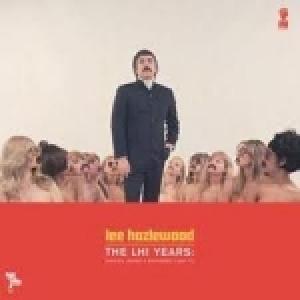
Net als Johnny Cash en Leonard Cohen is Lee Hazlewood technisch een vrij matige zanger, maar wint hij het op karakter en herkenbaarheid. Eind jaren vijftig werkte hij als producer voor o.m. Duane Eddy, ging vanaf 1963 optreden met de folkgroep The Shacklefords en liep toen zijn muze Nancy Sinatra tegen het lijf met wie hij de enkele wereldhits scoorde, met als grootste klapper These Boots Are Made For Walking. Hij werd vaak gezien als een soort playboy en omringde zich graag met mooie vrouwen. In de periode 1968-1971 maakte hij platen voor zijn eigen LHI label, maar zonder Nancy. Suzi Jane Hokom, Ann-Margret and Nina Lizell waren in die jaren zijn secondanten en hij produceerde ook de meeste andere platen op het label. De song If It's Monday Morning behoort tot het allerbeste dat Lee op de plaat heeft gezet, maar deze compilatie staat vol met klassieke tracks van de man die door o.m Sonic Youth, Beck en Jarvis Cocker nog altijd op handen wordt gedragen, al is hij dan alweer enkele jaren geleden overleden.
1 Califia (Stone Rider)
Featuring – Suzi Jane Hokom
2:48
2 The Bed 2:42
3 Sleep In The Grass
Featuring – Ann Margret
3:21
4 Leather And Lace
Featuring – Nina Lizell
3:08
5 If It's Monday Morning 4:02
6 The Night Before 3:18
7 Bye Babe 3:38
8 Victims Of The Night
Featuring – Ann Margret
2:38
9 Chico
Featuring – Ann Margret
2:42
10 Hey Cowboy
Featuring – Nina Lizell
3:22
11 No Train To Stockholm 2:23
12 Won't You Tell Your Dreams 3:56
13 Nobody Like You
Featuring – Suzi Jane Hokom
2:57
14 Trouble Maker 2:32
15 What's More I Don't Need Her 3:36
16 Come On Home To Me 3:01
17 I Just Learned To Run 3:04
With his handlebar moustache and booming baritone, Lee Hazlewood was one of the defining stars of the late ‘60s. Though he’s perhaps best known for his work with Nancy Sinatra (including writing mega-hit “These Boots Are Made For Walking”), Hazlewood did stunning work away from that particular glamour queen and found latter day champions in Beck, Sonic Youth, and Jarvis Cocker. Now, for Record Store Day 2012, we are kicking off our excavation of the Lee Hazlewood archives with this anthology, Singles, Nudes & Backsides, collecting the best of Lee’s solo songs and duets from his LHI (Lee Hazlewood Industries) imprint.
As a true legend of the great American songbook and a rebellious pioneer who left behind a lengthy trail of echo laden pop masterpieces, Lee’s influence continues to reverberate today. Between 1968-71, Hazlewood not only released his finest solo work, but produced numerous artists on LHI. From acid-folk and country-rock to pop-psych and soul, LHI issued dozens of long forgotten 45s and LPs. This series will include material from LHI (re-mastered for the first time from the original analog tapes), along with Lee’s output for other labels, rarities, and unreleased gems.
See the sleeve: surrounded by nude girls, each wearing a fake moustache, Hazlewood wears a suit, ever-so-slightly awkwardly playing the role of the ‘60s playboy. Just like the picture, the songs present a man conflicted; he’s the tender-hearted romantic, the broken-hearted loser and the rugged cowboy, all in one. It’s there in the western swing of “Califia (Stone Rider)”, the loneliness of ”The Bed” and the bleak beauty of ”If It’s Monday Morning.” Hazlewood’s tremulous voice was made for duets (indeed, he wrote ”Some Velvet Morning”, one of the greatest of all time); here, Suzi Jane Hokom, Ann-Margret and Nina Lizell play counterpart to his manly tones.
In the wonderful liner notes, written by British journalist Wyndham Wallace, the writer describes his friend Hazlewood as “a curmudgeonly, unpredictable sort at the best of times, as impatient with his own talent as he is with other people.” The Hazlewood Wallace knew was puzzled by the growing interest in him in the last two decades of his life, which was ended by cancer at age 78. That late flurry of interest saw him perform at the Royal Festival Hall in 1999, his first ever solo performance in the UK.
A natural wanderer, Lee lived a big life, fighting in the Korean War, working as a radio DJ in Phoenix, Arizona, setting up Viv Records in the ‘50s, working as a big-shot LA producer in the ‘60s, signing Phil Spector to his Trey Records label and prematurely announcing retirement in the wake of the mid-‘60s British invasion. He didn’t: Nancy Sinatra came along, the hits started flowing and he continued producing characterful solo albums into the ‘70s, which saw his move to Sweden. By 2007, Hazlewood was living in Vegas, and begrudgingly enjoying that flurry of latter-day interest in his work.